
Home › Garden Clearance › Bramble Clearance
Bramble is the plant that reclaims a neglected garden faster than anything else, and clearing it is one of the most common single jobs we are asked for.
Cutting it down is quick. Whether it stays gone depends on what happens to the crowns underneath.
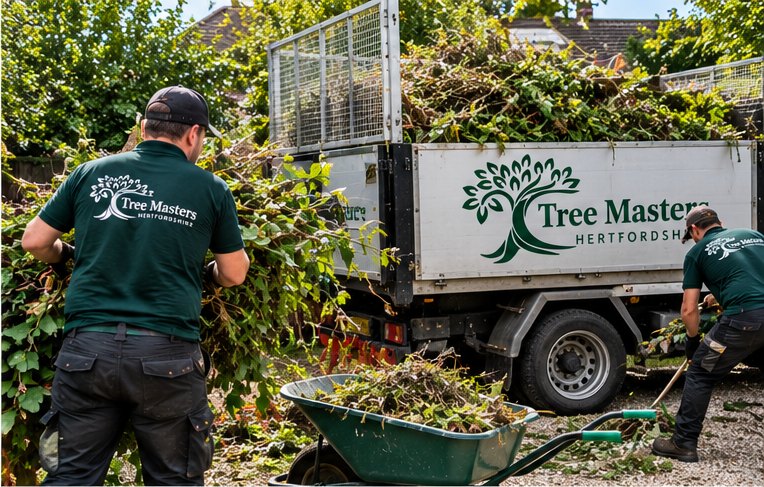
Why It Comes Back
A bramble grows from a woody root crown at ground level, and it also roots wherever a long stem touches the ground and layers. So an established patch is not one plant, it is dozens of connected and semi-connected crowns spread across the area.
Cut the top growth off and every one of those crowns is untouched and will send up new canes in the spring, usually more vigorously than before.
The Two Levels of the Job
Cut and clear
Everything cut down to ground level and taken away. Quick, cheap, and it gives you a usable space immediately. It will regrow, and this is the right choice where the area is going to be mown, grazed or kept cut afterwards — because repeated cutting does eventually exhaust the crowns.
Cut and grub out
The crowns dug out as well. Slower and more expensive, and it is what is needed where the ground is going to be turfed, planted, built on, or simply left alone. A bramble crown left under a new lawn comes straight through it.
What Our Bramble Clearance Service Covers
- Brambles, nettles, scrub and rough growth cut and removed
- Root crowns grubbed out where the ground is being reused
- Self-seeded saplings within the scrub dealt with
- Banks, ditches and awkward ground where a mower cannot go
- Fence lines cleared back so the boundary is visible again
- Paddocks, plots and larger areas of scrub
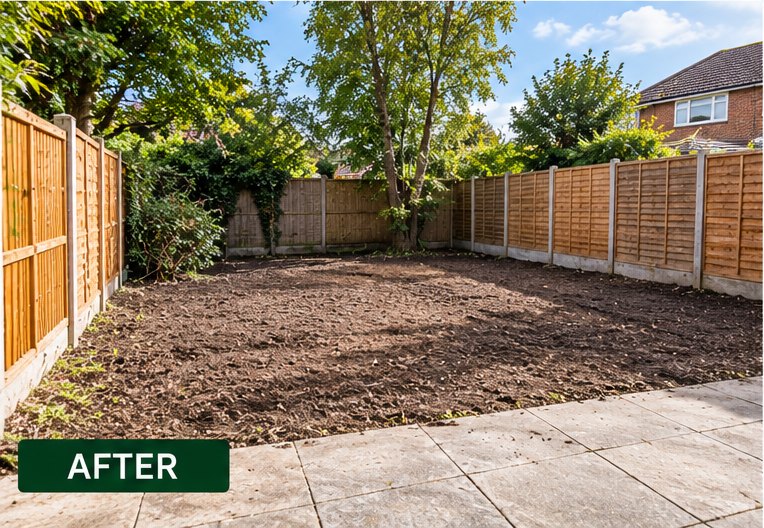
- Ground left ready for mowing, turfing or planting
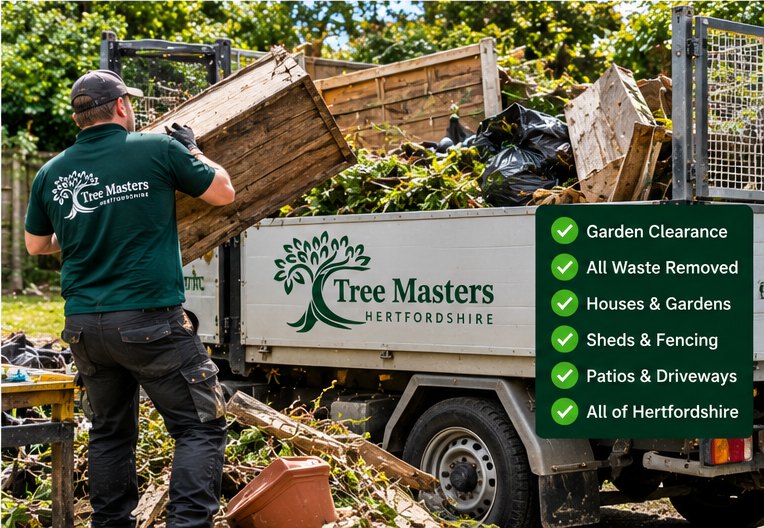
- All material removed
What Is Usually Underneath
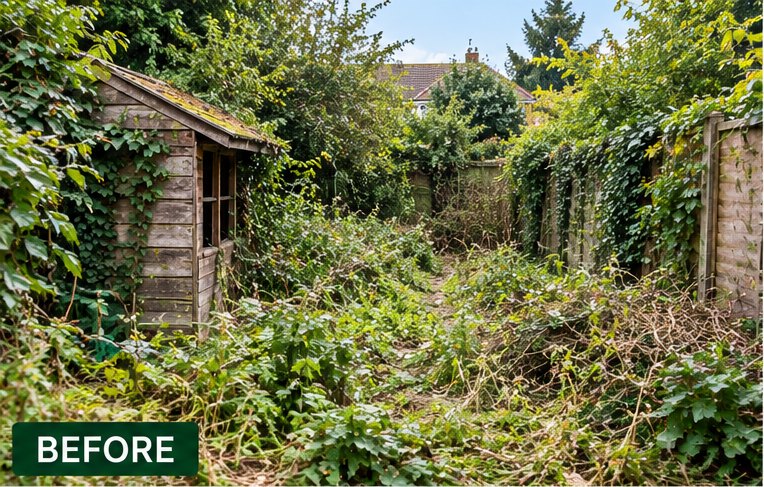
Brambles grow over things rather than through them, and a cleared patch routinely reveals old fencing and wire, dumped rubbish, buried rubble, stumps, and occasionally a path or a patio. Wire in particular is worth flagging if you know it is there, because it is unkind to a strimmer.
Timing
Late autumn through winter is the easiest — the growth has died back, the crowns are visible and the ground is soft enough to grub them out. It is also outside the nesting season, which matters because dense bramble is prime nesting habitat between roughly March and August.
Summer clearance is perfectly possible with the growth checked first, and on a large patch it is usually better to do the bulk of it in autumn.
Keeping It Clear
Whatever the area becomes, the thing that keeps bramble out is regular cutting. Mown grass, a maintained border or even a strimmed rough area will all stay clear indefinitely. Ground that is cleared and then left alone is ground that will be back to bramble within three or four years.
Garden Clearance Work Across Hertfordshire
Read More on This
Other Garden Clearance Work
Bramble Clearance in Your Part of Hertfordshire
We cover the whole county. Each town has its own garden clearance page covering the ground, the plots and the access that shape the work there.
Bramble Clearance — Common Questions
Will the brambles grow back?
If only the top growth is cut, yes. Grubbing the root crowns out is what stops it, and that is the difference between the two levels of the job.
Do I need the crowns out?
If the ground is being turfed, planted or built on, yes. If it is going to be mown from now on, repeated cutting will exhaust them anyway.
When is the best time?
Late autumn to winter — growth died back, crowns visible, ground soft, and outside the nesting season.
Can you clear a bank or a ditch?
Yes. Awkward ground a mower cannot reach is a good part of this work.
What about wire and rubbish under it?
Common, and worth telling us about if you know. It comes out with everything else but it changes how carefully the strimming is done.
Get a Quote for Bramble Clearance
Tell us what needs doing across Hertfordshire and we will quote for the work. Call 07388 094829, message us on WhatsApp or use the form below.