Home › Hedge Maintenance › Hedge Reduction
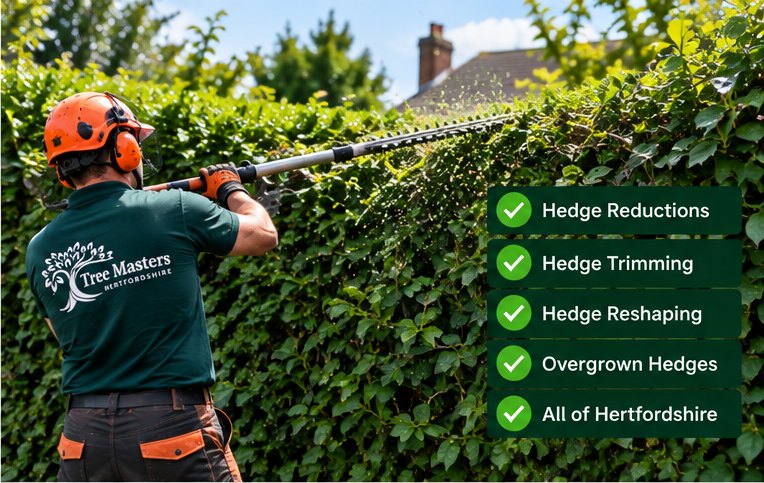
Reduction is a different job from trimming. Trimming cuts this year's growth back to last year's line. Reduction cuts into established wood to bring a hedge back to a size somebody can actually live with.
Whether it works depends almost entirely on the species, and that is the first thing worth establishing.
Species That Take It Well
- Yew — excellent. Regenerates from old wood, and hard reduction is how ancient yew hedges are maintained
- Beech and hornbeam — good, cut in late winter
- Hawthorn, blackthorn and native mixed hedging — bred for it. Field hedges are cut to a fraction of their height routinely
- Laurel — regenerates readily, looks rough for a season
- Privet — extremely forgiving, can be taken to almost nothing
- Holly — slower, but it recovers
The Species That Does Not
Leylandii, Lawson cypress and thuja have no dormant buds in old brown wood. Cut below the green and it stays brown permanently. This is the most common disappointment in hedge work and it is entirely predictable, so we will say it before the job rather than leave you to discover it.
On a conifer hedge, what can be done is a reduction to the lowest point where there is still green foliage, then a firm annual cut to hold it there. Where that is not close enough to what you want, the real choice is between living with it and replacing it — and replacement is less drastic than it sounds, because a new hedge of an appropriate species reaches useful screening height in a few years and is then maintainable at the size you actually wanted.
Height and Width Are Different Jobs
Height reduction
Usually done in one go, up to about a third of the height on a species that regenerates. The cut face is bare for a season and greens over from the sides.
Width reduction
One side at a time, with a full growing season between them. A hedge cut back hard on both faces in the same year has lost almost all its leaf area at once, and species that would recover comfortably from one side often do not survive both.
Width is the dimension people notice last and it is where the garden goes. Half a metre off each side of a twenty-metre boundary returns twenty square metres of garden.
What Our Hedge Reduction Service Covers
- Height reduction to an agreed line
- Staged width reduction, one side per season
- Renovation of old neglected hedges over two or three years
- Reduction of hedges that have gone bare and leggy at the base
- Removal of trees that have grown up inside a hedge line
- Re-establishing a proper tapered profile so it stays dense
- All material removed — and there is a great deal of it
Timing
Late winter for deciduous hedges, roughly January to early March, while they are dormant. Early spring or autumn for laurel, holly and privet. Early spring for yew, which then has the whole season to respond.
Nesting birds rule out heavy reduction between about March and August, which in practice makes September to February the working window for this kind of job.
What to Expect Afterwards
A reduced hedge looks severe for a season. The cut faces are bare, the shape is blunt, and it does not look like the photographs until a full growing season has been through it. On yew, two or three. That is normal and it is worth knowing before rather than after.
Hedge Maintenance Work Across Hertfordshire
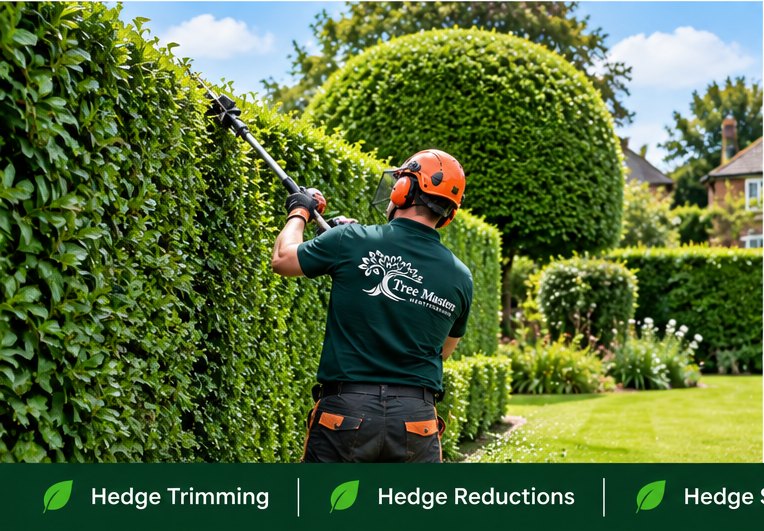
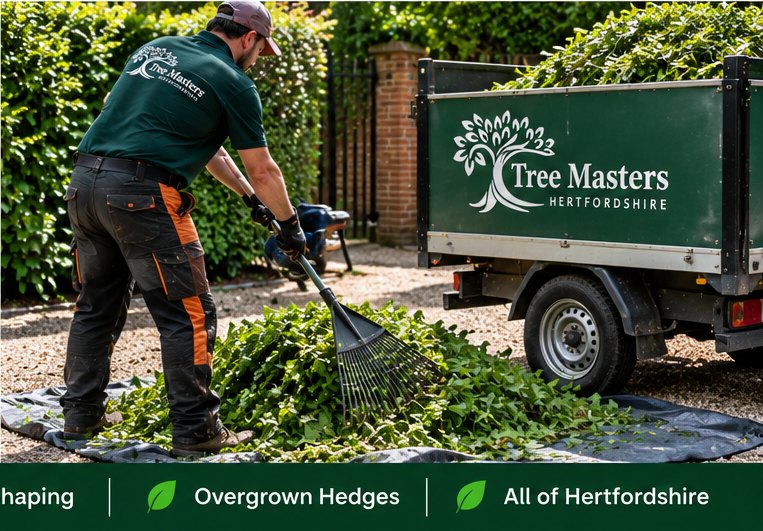
Read More on This
Other Hedge Maintenance Work
Hedge Reduction in Your Part of Hertfordshire
We cover the whole county. Each town has its own hedge maintenance page covering the ground, the plots and the access that shape the work there.
Hedge Reduction — Common Questions
Can my leylandii hedge be reduced?
Down to the lowest green foliage, yes. Below that it will not regrow and the cut face stays brown permanently.
How much can come off in one go?
About a third of the height on a species that regenerates. More is possible on vigorous species and it looks severe for longer.
Can you do both sides and the top together?
The top and one side, yes. Both sides in the same season is what kills hedges that would otherwise have recovered.
When should it be done?
September to February, and within that the right month depends on the species. We will tell you which.
Will it look bad afterwards?
For a season, yes. Bare cut faces and a blunt shape are normal, and it greens over from the sides through the following year.
Get a Quote for Hedge Reduction
Tell us what needs doing across Hertfordshire and we will quote for the work. Call 07388 094829, message us on WhatsApp or use the form below.