
Home › Advice Centre › Turfing
A new lawn goes through several distinct stages, and knowing which one you are in tells you what to do and what to worry about.
Week by Week
Days 1 to 7 — knitting
Nothing visible is happening and a great deal is happening. Fine roots are beginning to grow from the underside of the turf into the soil. The grass may look slightly dull, which is normal. Water daily and thoroughly, and stay off entirely.
Weeks 2 to 3 — rooting
Roots push down properly. Colour improves and the grass starts growing rather than just sitting. Tug a corner — it should begin to resist. Keep watering; light traffic on boards only.
Weeks 3 to 4 — first mow
Once it resists a tug, mow with the blades high and sharp. The first cut is genuinely important: it prompts the grass to thicken and spread sideways rather than upward.
Weeks 4 to 6 — knitting together
Seams start to disappear as the grass grows across them. Roots are reaching several centimetres down. Watering can drop to twice a week, done properly. Normal walking is fine.
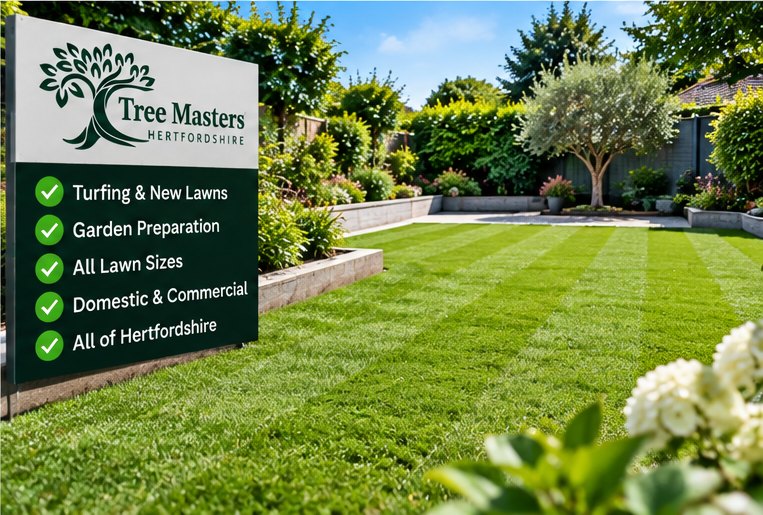
Months 2 to 3 — a lawn
Seams should be invisible. The lawn takes ordinary use, mows normally and needs watering only in dry spells. This is when most people stop thinking about it, which is reasonable.
Months 6 to 12 — establishment proper
Roots reach full depth, the sward thickens, and the lawn becomes genuinely hardwearing and able to look after itself through a dry summer. A lawn in its first summer is more vulnerable than it looks; in its second it is a different thing entirely.
What Slows It Down
- Under-watering — by a distance the commonest cause
- Cold soil. Turf laid in December may not root properly until March, and there is nothing wrong with that
- Shade — slower everywhere it falls, and permanently slower in deep shade
- Poor or shallow soil — roots stop where the decent soil does
- Compacted ground underneath, which roots cannot get into
- Being walked on early, which breaks the new roots and resets that area
Things That Look Wrong and Are Not
- Visible seams for the first month. They close
- Slight yellowing in the first fortnight, particularly if the turf was stacked a day or two. It greens up
- Different shades across the lawn, from different parts of the field it was cut from. It evens out
- Slower growth in one corner — usually shade or a drier spot
- Mushrooms, which are decaying organic matter in the soil doing what it does. Harmless, and they pass
Things That Are Actually Wrong
- Gaps opening at the seams — the turf is drying and shrinking. Water heavily now
- Pieces still lifting freely after four weeks — it is not rooting, and the reason is usually water or poor contact with the soil underneath
- Squelching underfoot — too much water, or a drainage problem that preparation did not solve
- Whole areas browning off rather than edges — worth looking at properly
View our Hertfordshire Turfing service →
More Turfing Advice
Visit the Tree Masters Hertfordshire Advice Centre →
Ask Us About Your Own Garden
If your new lawn is not doing what this page describes, tell us where you are in the timeline and what you have been doing. It is usually watering, and it is usually fixable.
Tell us what needs doing across Hertfordshire and we will quote for the work. Call 07388 094829, message us on WhatsApp or use the form below.