
Home › Advice Centre › Turfing
Turf is the easy part of a new lawn and it is about ten per cent of the work. Everything that determines whether the lawn is good happens before a single roll is unwrapped.
The Sequence
- Strip what is there. Old turf, growth and the top layer of thatch, taken off site. Not rotovated in — burying an old lawn creates a layer that decays and settles
- Cultivate. Rotovate or dig to 15 to 20 centimetres, which breaks up compaction and lets roots get down
- Remove perennial weed roots. Couch, bindweed, ground elder, bramble, nettle, dock. Every fragment left will come up through the new lawn, and rotovating chops them into more pieces, which is why they are picked out rather than turned in
- Clear stones and debris out of the top layer
- Add topsoil if depth is short, and improve it if it is poor
- Level and grade. Rough level with a rake, then a straight edge or a line where it matters
- Firm it. Heel or roll, evenly. The step people skip and the one that causes dips
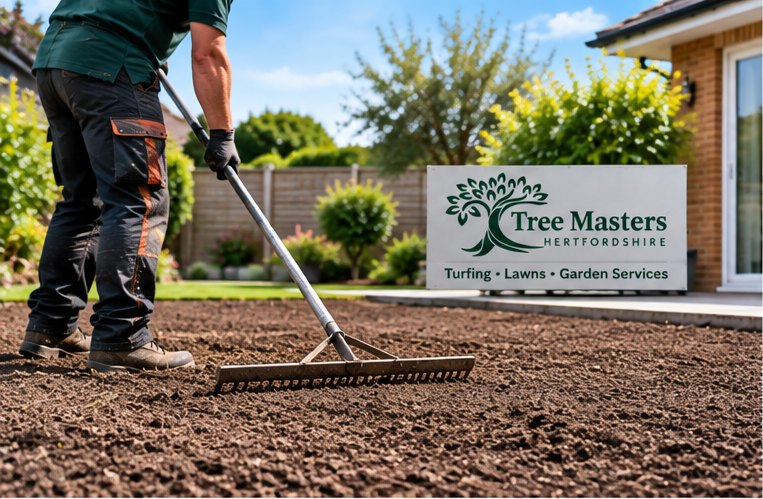
- Rake to a fine tilth so the turf makes proper contact
- Pre-turf feed, raked in a day or two before
The Three Things That Actually Decide It
Depth of decent soil
A lawn wants at least 10 to 15 centimetres of reasonable topsoil under it, and more is better. A great many gardens — new builds especially — have a few centimetres of soil over compacted subsoil or builders' rubble, and turf laid on that is living in a very thin layer. It looks fine until the first dry spell.
Firming, and firming evenly
Soft spots become dips, and they are almost impossible to correct once turf is down. Firming is not compacting — you are not trying to make it hard, you are trying to remove air pockets so nothing sinks later. Heel it over evenly or use a light roller, then rake again. Any area that has been dug deeper, backfilled, or had a stump ground out needs particular attention.
Weed roots out
The single commonest reason a new lawn disappoints in its second year. Turf will suppress annual weeds perfectly well; it does nothing whatever against established perennial roots, and there is no practical way to remove them afterwards without lifting the lawn.
Drainage, If the Ground Sits Wet
Turf on ground that floods will not survive, and no amount of preparation to the surface changes that. If an area stands in water in winter, the drainage is the job and the lawn comes afterwards. We would say so rather than lay turf on it.
Lesser cases — heavy clay that is slow rather than waterlogged — are much improved by breaking up the compacted layer during cultivation and adding organic matter and grit.
How Long It Should Take
On a straightforward domestic lawn, preparation is most of a day and laying is a couple of hours. If somebody proposes to strip, prepare and lay a large area in a morning, the preparation is what is being left out.
Leave a gap if you can. Preparing the ground and letting it settle for a week or two before laying lets any dips show themselves while they are still easy to correct, and lets a flush of weed seedlings come up and be hoed off. Not essential, and it makes a noticeable difference.
View our Hertfordshire Turfing service →
More Turfing Advice
Visit the Tree Masters Hertfordshire Advice Centre →
Ask Us About Your Own Garden
If you are not sure how much topsoil is under your garden, we can tell you on site. It is usually the number that decides how the job is done.
Tell us what needs doing across Hertfordshire and we will quote for the work. Call 07388 094829, message us on WhatsApp or use the form below.