Home › Advice Centre › Garden Clearance
A clearance produces a surprising quantity of material, and where it goes is not only a practical question. Part of the legal responsibility for it stays with you, which most people do not realise.
The Legal Part, Because It Matters Most
Waste from your property remains your responsibility until it is correctly handed to somebody entitled to take it. Anyone removing it as part of a business must be a registered waste carrier. You have a duty to take reasonable steps to check that they are. Waste fly-tipped after it leaves your garden can be traced back to the householder, and “somebody took it away” is not a defence.
The reasonable step is simply to ask for the waste carrier registration number. Any legitimate operator gives it without hesitating, and it can be checked free on the Environment Agency's public register. If somebody is reluctant to provide it, that tells you what you need to know.
This is also why a quotation that is dramatically cheaper than the others deserves a question about disposal. Tipping costs money; the cheapest way to avoid it is not to tip legally.
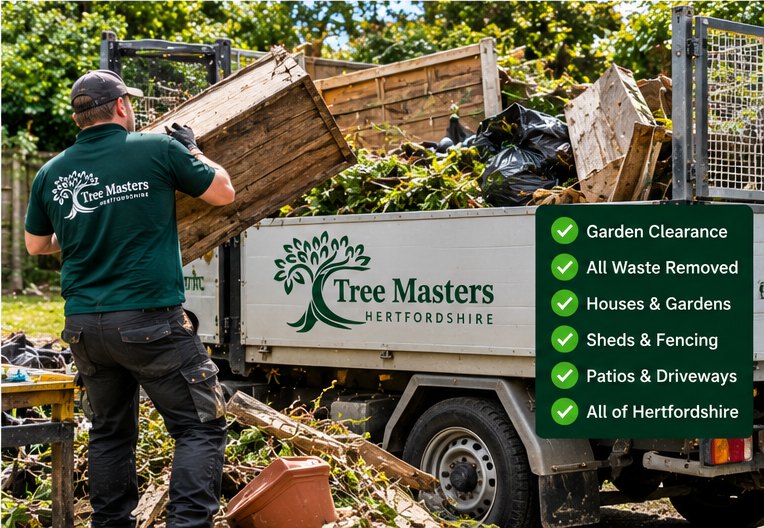
The Streams a Clearance Produces
Green waste
The bulk of it. Chipped on site where a chipper can get in, which reduces the volume dramatically, then composted or used for biomass. Nothing useful is landfilled.
Timber
Cordwood from tree work goes for firewood; treated timber such as old fence panels cannot and goes as wood waste, which costs more to dispose of.
Soil and rubble
A different stream at a different rate. Buried rubble is extremely common in neglected gardens and is worth flagging if you know it is there.
Household and mixed waste
Whatever has been dumped over the years. Separated and taken to the appropriate facility, and priced separately because the disposal costs more than green waste.
Things that need specific handling
- Asbestos — old shed and garage roofs in particular. Not touched, and dealt with by a licensed specialist. If you suspect it, say so before anybody starts
- Invasive species. Japanese knotweed is controlled waste with strict disposal rules. Bamboo rhizome is not legally controlled but must leave site whole and never be composted
- Paint, fuel, chemicals found in sheds
What Is Worth Keeping on Site
This genuinely reduces the cost, because disposal is a real part of the price:
- Woodchip for paths and as a surface mulch — on top of soil, never dug in
- Logs, if you have a burner. They need a year or two seasoned before they burn properly
- A habitat pile in a corner. One of the more valuable things in a garden and it costs nothing
- Clean topsoil that turns up during the work
Skips and Council Collections
Both have their place, and both have limits worth knowing. A skip on the road usually needs a licence from the council. Council green waste collections have caps on quantity and on stem thickness that a clearance will exceed comfortably, and the tip has limits on how much you can bring and how often.
For most clearances, disposal included in the job is both cheaper and considerably less trouble than arranging it separately.
View our Hertfordshire Garden Clearance service →
More Garden Clearance Advice
Visit the Tree Masters Hertfordshire Advice Centre →
Ask Us About Your Own Garden
Tell us if there is likely to be rubble, old fencing or household waste as well as green waste. It changes which vehicle comes and what the disposal costs.
Tell us what needs doing across Hertfordshire and we will quote for the work. Call 07388 094829, message us on WhatsApp or use the form below.