Home › Advice Centre › Tree Surgery
People usually ring up having already decided. The tree is too big, it has to come out. Quite often it does not, and the thing that was actually bothering them is fixed by taking a third off it.
So the useful first question is not “remove or reduce”. It is: what is the tree doing that you want it to stop doing?
What Reduction Actually Fixes
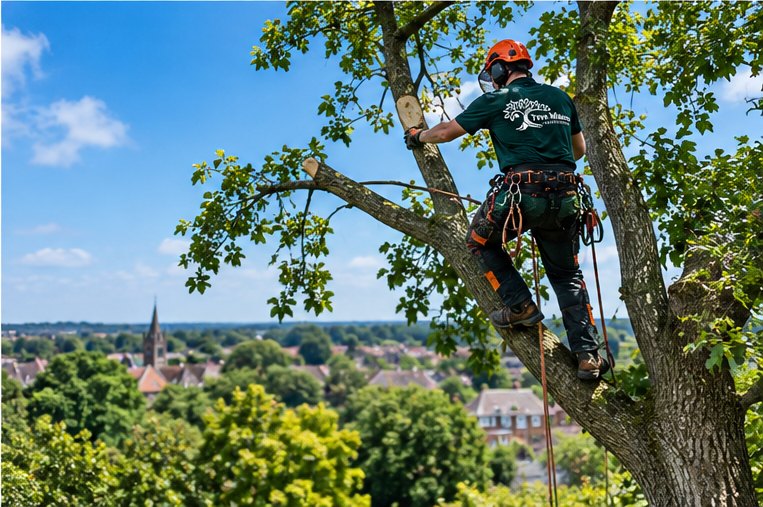
- Shade. Reducing the crown, or thinning it, lets light through. Thinning in particular changes the quality of the shade from solid to dappled without changing the tree's outline
- Size and proximity. A crown that has grown over a roof, a conservatory or a boundary can be brought back
- Wind loading. A smaller crown catches less wind, which matters a great deal on exposed ground
- Weight on a long limb. Reducing the end weight on a heavy lateral is often the whole answer to a limb somebody is worried about
What Reduction Does Not Fix
Reduction changes the crown. It does not change anything below it, and there is no point paying for it where the problem is structural:
- Significant decay in the trunk or root flare. A smaller crown on a failing stem is still on a failing stem
- The tree being in the wrong place entirely. If it is two metres from a wall and you want that space, no amount of pruning gives it to you
- A tree that is dead. Nothing to reduce
- Roots. Crown work does not address root damage to drains, paving or foundations — that is a separate question with separate advice
The Case for Keeping It
A mature tree is not replaceable on any useful timescale. Something planted to replace a forty-year-old tree is a forty-year project. It is also, in most gardens, the single largest living thing on the plot, and it is doing measurable work: shade in summer, shelter, water uptake, and a considerable amount for what lives in the garden.
None of which is a reason to keep a tree that needs to go. It is a reason to be sure before removing one, because the decision is permanent in a way that reduction is not.
One thing worth checking before you decide anything: whether the tree is protected. A Tree Preservation Order or a conservation area makes removal a matter for the council rather than a matter of preference, and the answer to a removal application is often “reduction, yes; removal, no”. The check is free.
Where Removal Is the Honest Answer
There are cases where reduction is a way of spending money to delay a decision, and it is better to say so:
- The tree is dead, or declining to the point where it will not recover
- There is substantial decay at the base or in the main stem
- It has been repeatedly topped in the past and the regrowth is attached to old cut ends rather than to sound wood
- It is genuinely in the wrong place — against a wall, over a drain run, or planted as a small specimen that turned out to be a forest species
- It is a self-seeded sycamore or ash in a border that nobody chose and nobody wants
Cost, Since It Comes Up
Reduction is usually cheaper than removal for the same tree, because there is less material to deal with and no stump. But a reduction that will need repeating every three years is not necessarily the cheaper choice over ten. If a tree is being kept permanently smaller than it wants to be, that is an ongoing commitment and it is worth pricing as one.
View our Hertfordshire Tree Surgery service →
More Tree Surgery Advice
Visit the Tree Masters Hertfordshire Advice Centre →
Ask Us About Your Own Garden
Tell us what the tree is doing that you would like it to stop doing. That is the question that decides this, and we will give you a straight answer even when it is “leave it alone”.
Tell us what needs doing across Hertfordshire and we will quote for the work. Call 07388 094829, message us on WhatsApp or use the form below.