Home › Advice Centre › Ivy Removal
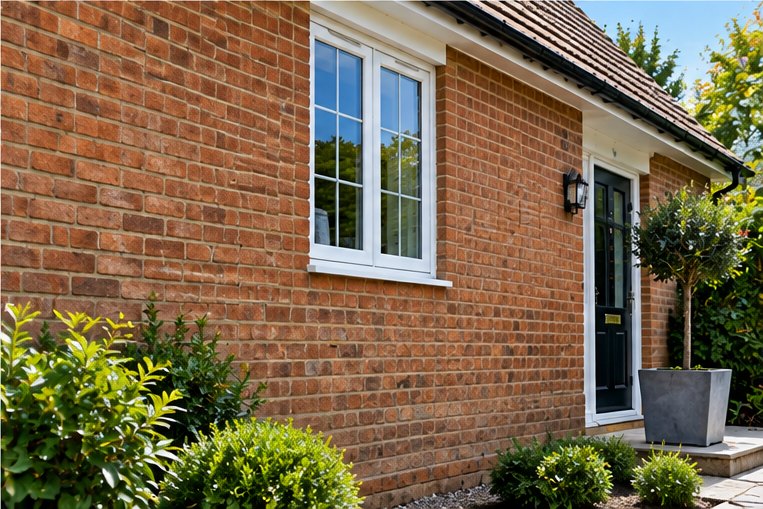
Taking established ivy off is usually the moment a wall, a fence or a shed is properly visible for the first time in years, and what is underneath is the real finding. Almost none of it is caused by the removal.
What You Will Probably Find
- Staining and rootlet residue — a brown fuzz of adhesive rootlets left on the surface. Brushes off; the shadow weathers away over a season or two
- Mortar that needs repointing — usually where it was already soft. The ivy exploited it rather than created it
- Render that has blown where ivy got behind it
- A fence in worse condition than expected, occasionally one that was being held up
- A lifted felt edge or a blocked gutter on a shed or outbuilding
- Blocked airbricks, which are worth clearing properly — they are there for a reason
- Paintwork that has gone under the growth
Doing It in the Right Order
- Let the surface dry out. A wall under ivy has been permanently damp. Give it several weeks before assessing it, and considerably longer before painting or rendering
- Brush off the residue once dry — a stiff brush, not a pressure washer, which drives water into every joint the ivy opened
- Repair what needs repairing. Repointing, render, fascias, the shed roof. This is the moment, while everything is accessible and visible
- Then decide what goes there, if anything
Do not paint or render a wall that has just had ivy taken off it. It is wetter than it looks, and sealing that moisture in causes more damage than the ivy was doing. Give it a full drying season.
Keeping It From Starting Again
A clear strip along the base is the whole answer. Ivy climbs from the ground, so 20 or 30 centimetres kept clear along the foot of a wall or a fence, checked once or twice a year with anything climbing cut through, prevents the entire situation returning. It takes minutes and it is the single most useful thing anybody does about ivy.
Where the root crown could not be dug out, expect shoots for a season or two and cut them as they appear rather than annually.
What to Put There Instead
A newly cleared wall often looks starker than people expect, and the garden has genuinely lost cover that wildlife was using. Both are worth addressing:
- A climber on wires or trellis — clematis, honeysuckle, a climbing rose. Held off the wall on a support rather than attached to it, which is the key difference from ivy
- A self-clinging alternative on a sound wall, where you want the look with less vigour — climbing hydrangea is slower and far better behaved
- Wall shrubs trained flat, which give structure with none of the moisture problem
- Leaving ivy somewhere deliberate — on the far boundary or the back of the shed, with a cut line where it stops. That keeps the wildlife value and none of the trouble
If a Fence Has to Go
Where clearing the ivy has revealed a fence that was structurally finished, replacing it is usually cheaper and quicker done straight away while the line is clear and accessible, rather than after anything new has been planted along it.
View our Hertfordshire Ivy Removal service →
More Ivy Removal Advice
Visit the Tree Masters Hertfordshire Advice Centre →
Ask Us About Your Own Garden
If clearing ivy has uncovered something you were not expecting, send a photograph. We will tell you honestly whether it is the ivy's doing or was there beforehand.
Tell us what needs doing across Hertfordshire and we will quote for the work. Call 07388 094829, message us on WhatsApp or use the form below.